Concerned about silage losses?
19 January 2026
It’s fair to say, many farmers are facing tight silage stocks this winter – after the summer drought. If you’re in that position, and looking to minimise further losses, this is for you.
By Amanda Clements, Volac Technical Business Manager for Ecosyl.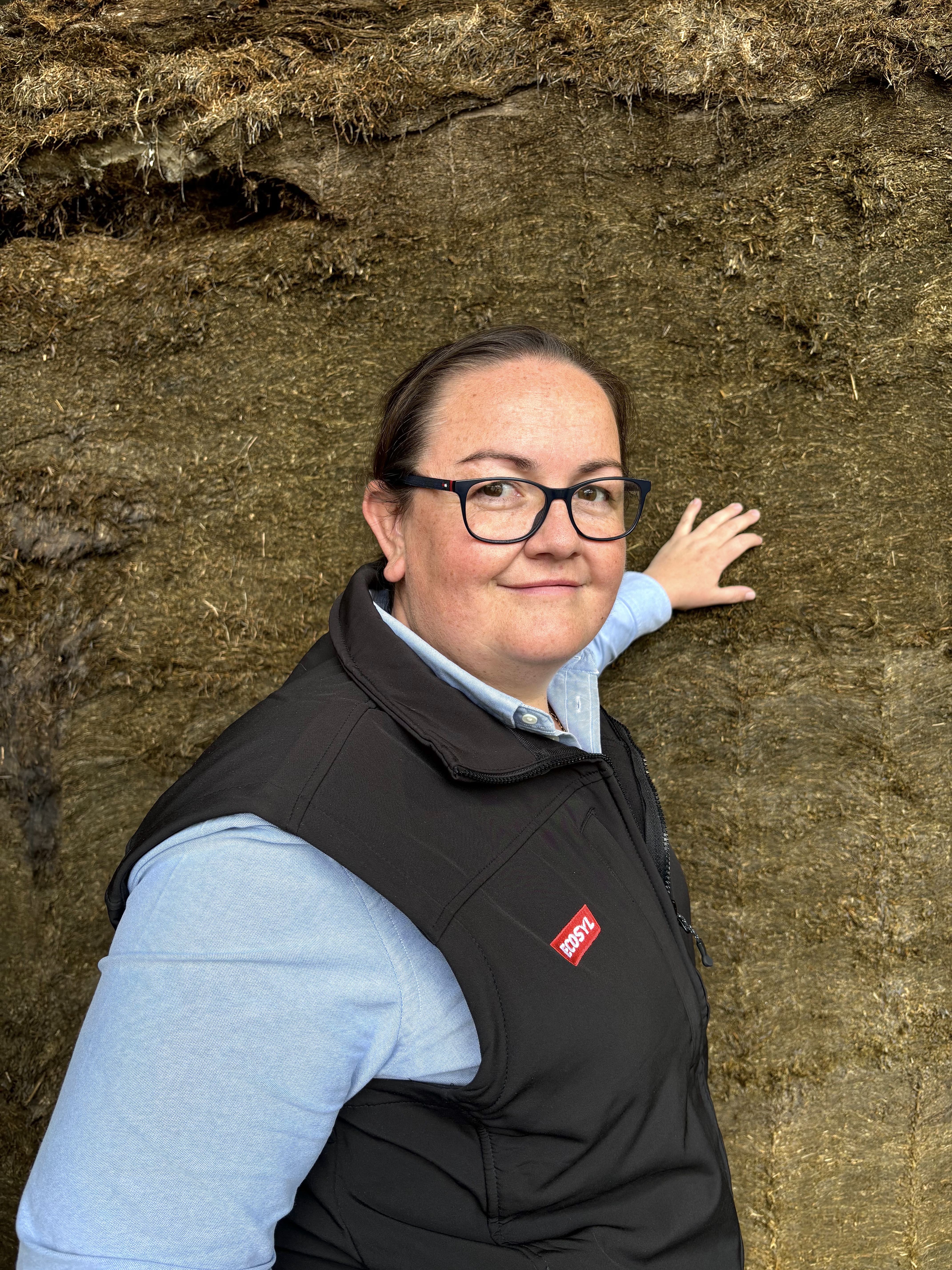
That said, even if you’re comfortable with silage stocks, avoiding complacency is still key.
Spoilage microbes will happily consume silage quality and dry matter (DM) irrespective of whether you’ve got plenty of silage or not much. And we’ve no way of knowing how long silage stocks need to last before turnout.
Minimising losses
Although you can’t eradicate losses, you can take steps to minimise them.
Air entering silage is the big enemy because it allows unwanted yeasts and moulds to flourish. These cause DM and nutrient losses through heating, and certain moulds produce mycotoxins. Plus, silage palatability can be reduced, so cows refuse it.
The open clamp face is an obvious point of air entry, so keep it smooth and tidy. A block cutter, shear grab or silage defacer is useful here. But ensure knives are suitable sharp so they don’t ‘tear’ the face.
Equally, move across clamps quickly daily so that each ‘new’ face is exposed to air for the minimum time. An option here is to only remove half-depth grabs – although it’s important that forks don’t leave enlarged holes if they can’t ‘grip’ the silage securely as the knife descends.
Top, sides and floor
The tops and sides of clamps are also susceptible to air ingress. If silage near the top is heating, consider adding extra weight here to compact it. If only possible towards the front, keep moving it backward as you progress through the clamp.
Similarly, remove old silage from clamp floors; it spreads mould spores.
Another tip is to prevent rain driving into the silage face as this can dilute the fermentation acid that’s preserving it. However, avoid pulling top sheets down over the face as this creates a microclimate that encourages yeasts and moulds, but also don’t cut top sheets back too far.
If silage heats up in the mixer wagon, adding the silage stabiliser, EcoTMR, which inhibits yeasts and moulds, is well worth considering. Keeping silage fresher for longer, it has cut nutrient losses by as much as half.
And remember, when making 2026 silage use best practice with mowing, wilting, harvesting, treating with an inoculant (such as Ecosyl) and clamping. Because losses are best prevented at source.
Amanda Clements can be contacted at Volac on 07773 667902