Follow the forage – kicking off the silage season
27 May 2026
An early cut of fast grass has set Shropshire producer, Mark Fitton up for the year and hopefully put him on track to replace dwindling forage stocks, as long as another drought is not imminent.
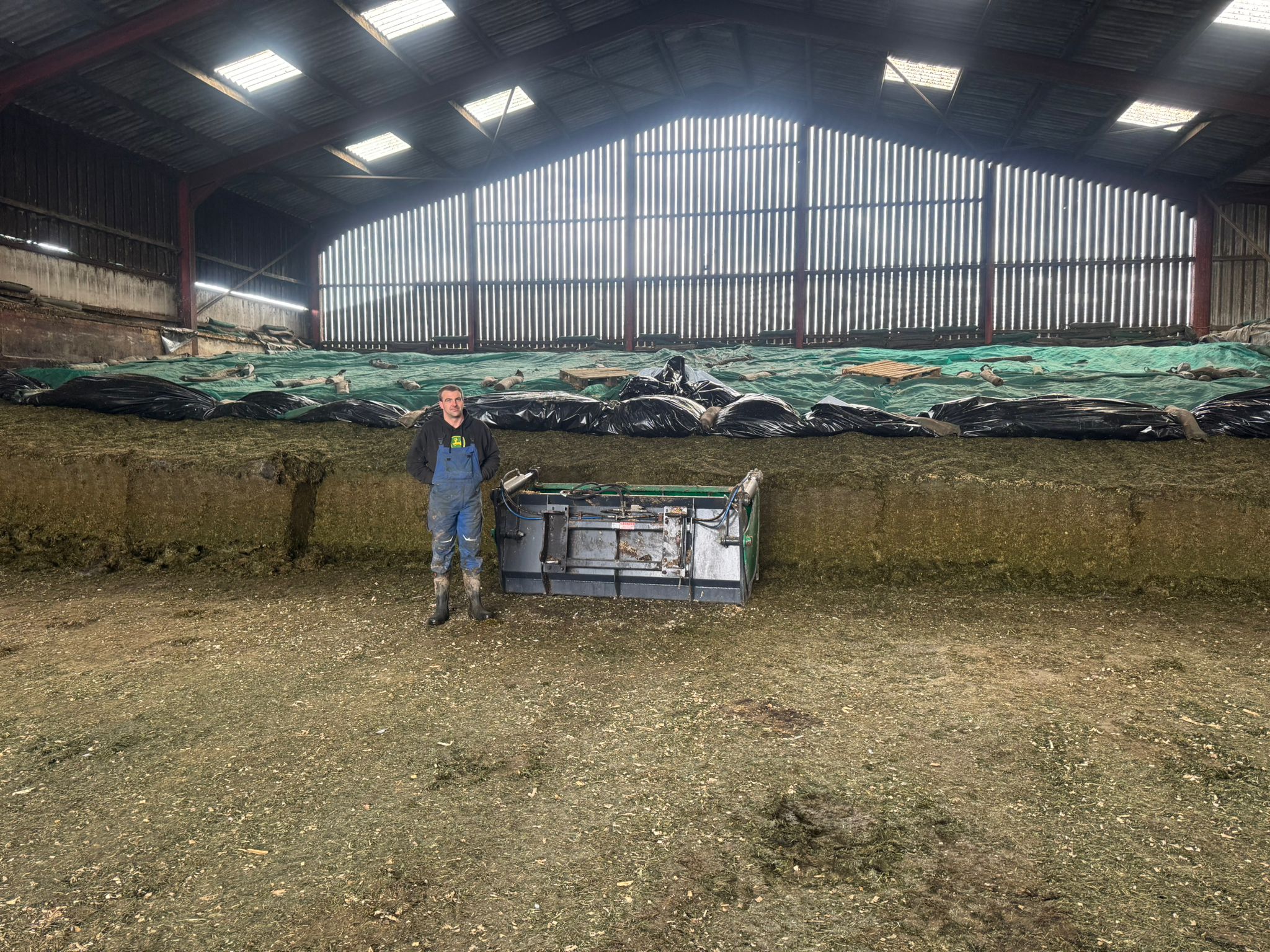 The 35ha of Italian ryegrass was drilled after maize in an to attempt to part-fill the forage gap created by supressed grass yields from last year’s drought. Liquid muck went on at the end of January, and the crop was cut at the start of April, six days after glyphosate was applied. Cold weather and the odd shower meant tedding was essential, with Mark going in twice with his 11m tedder to achieve the quickest wilt possible. As always, Ecosyl silage additive was applied to optimise fermentation in the clamp and safeguard DM and quality. The crop came off at 5t/acre and went into a “nearly empty” clamp, with one tractor dedicated to rolling.
Consolidation in the clamp is number one,” says Mark, who farm at The Farms, Whitchurch, Shropshire. “If you don’t get the air out, you’re wasting your time. I would estimate the dry matter of the crop at 28-29%. I’d usually go to 30-32%, but for the start of April, it’s not that bad.
It was an expensive cut, but it’s set us up for the year and I think it was worth doing.
 Mark believes the current market volatility means making as much quality forage as possible is even more essential to avoid buying-in more feed.
Maize preparation
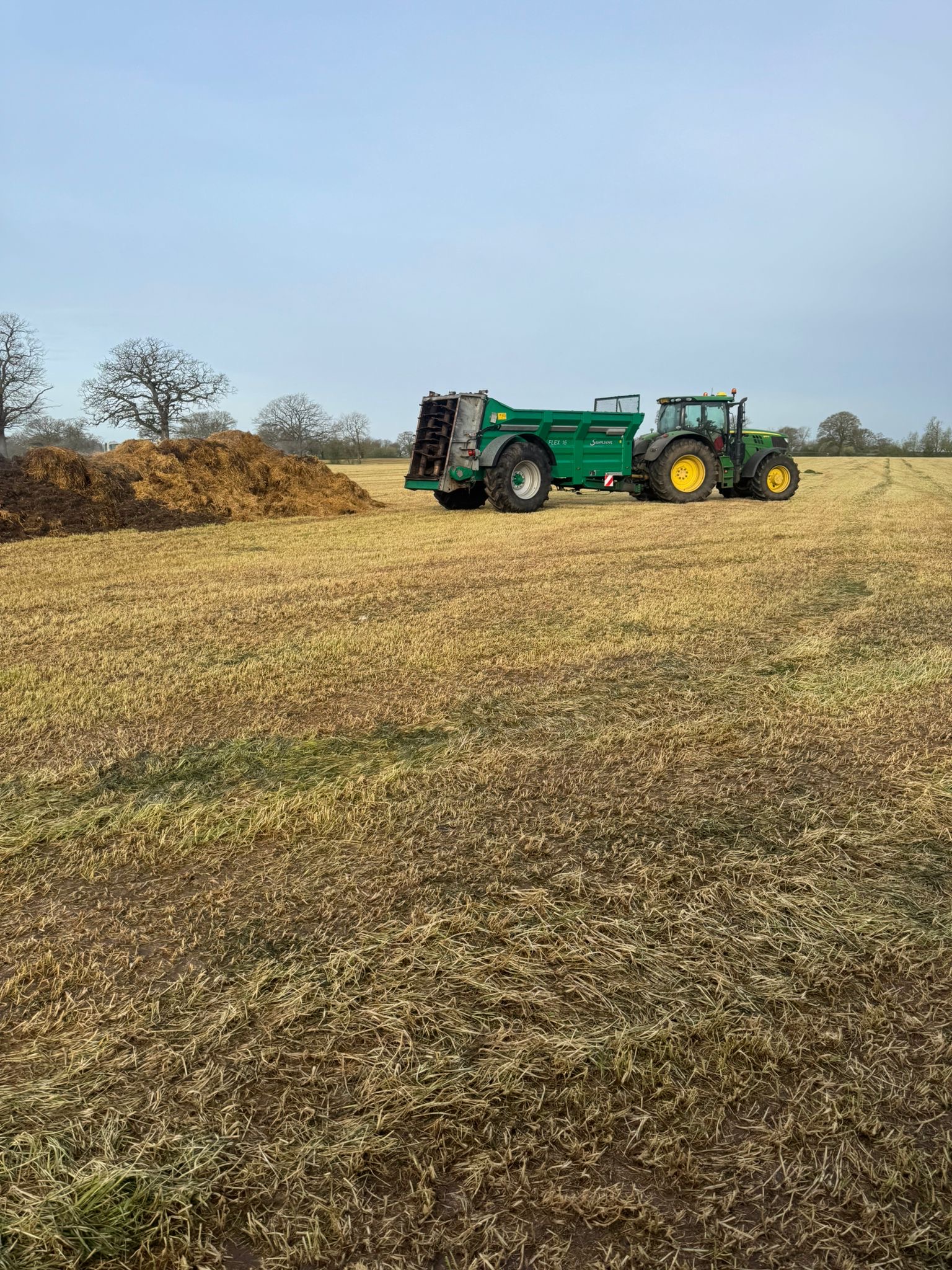
The team were quick to apply slurry and separated solids at about 10t/acre after cutting, with the plough following thereafter. Speaking in mid-April, Mark said this would set them up to drill the 35ha of maize towards the end of April, with first cut grass silage hopefully also taken around the same time.
The 250 cow Procross Swedish Red x Montbeliarde x Holstein herd have been grazing day and night from around the first week of April. They are strip-grazed on about 20ha, with the remaining 101ha cut for silage, depending on grass growth and requirements.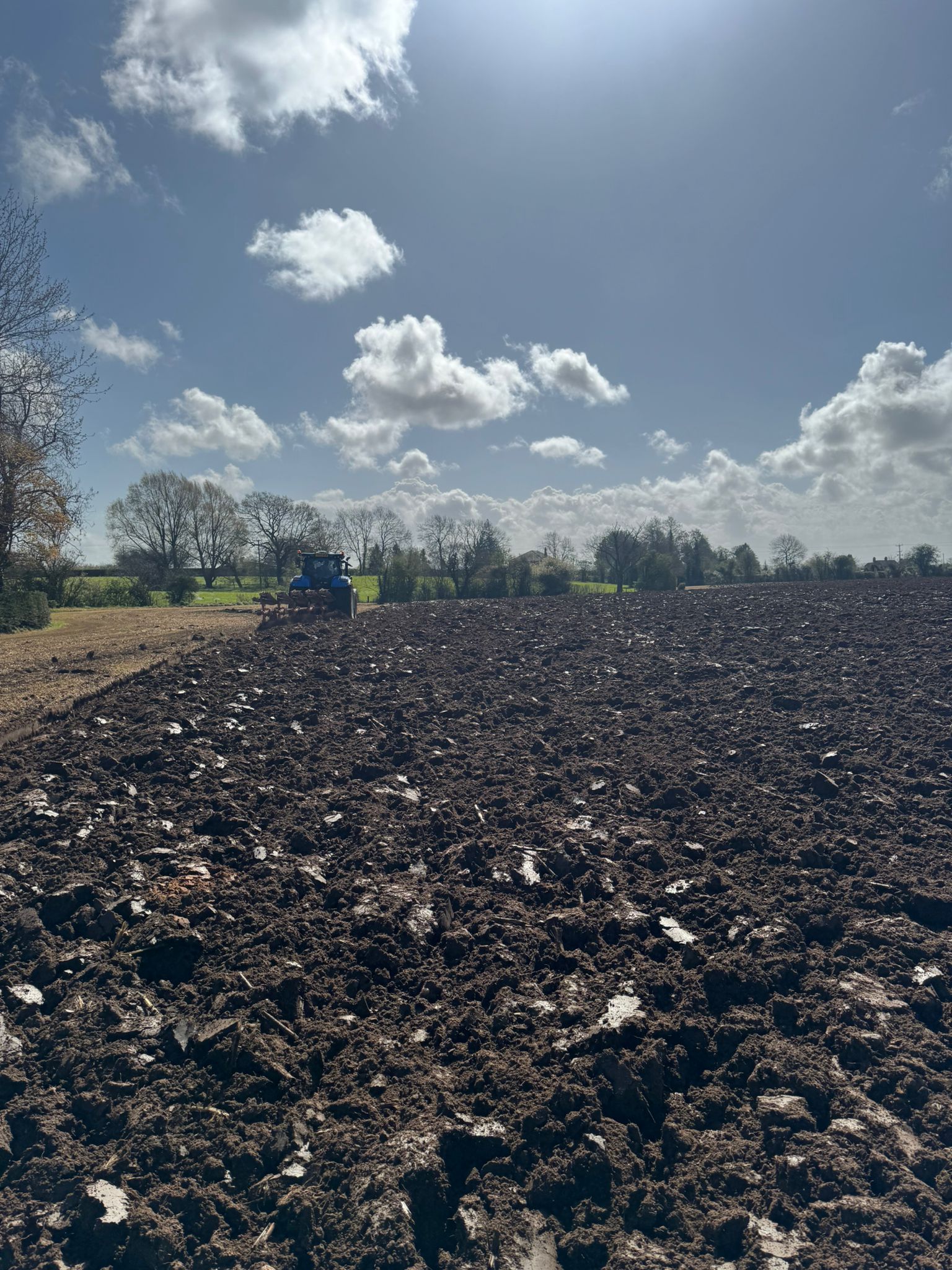
Mark says: “Grass growth has been quite good. It’s been quite a kind winter, although it’s been wet at points. We got the fertiliser on at the end of February and this last week it’s coming well. The grass is flying.”
Having only been able to cut three times last season due to the drought, the hope is that he can return to the farm’s standard multi-cut, 4-5 cut system this year so as to optimise quality and total dry matter yields.
If you want to produce higher-quality silage with fewer losses, follow Cut to Clamp.