Global experts share six tips for making the most of maize
27 July 2026
Utilising cutting-edge technology and paying attention at every stage of maize production would help growers realise its full potential as “king of the forage crops.”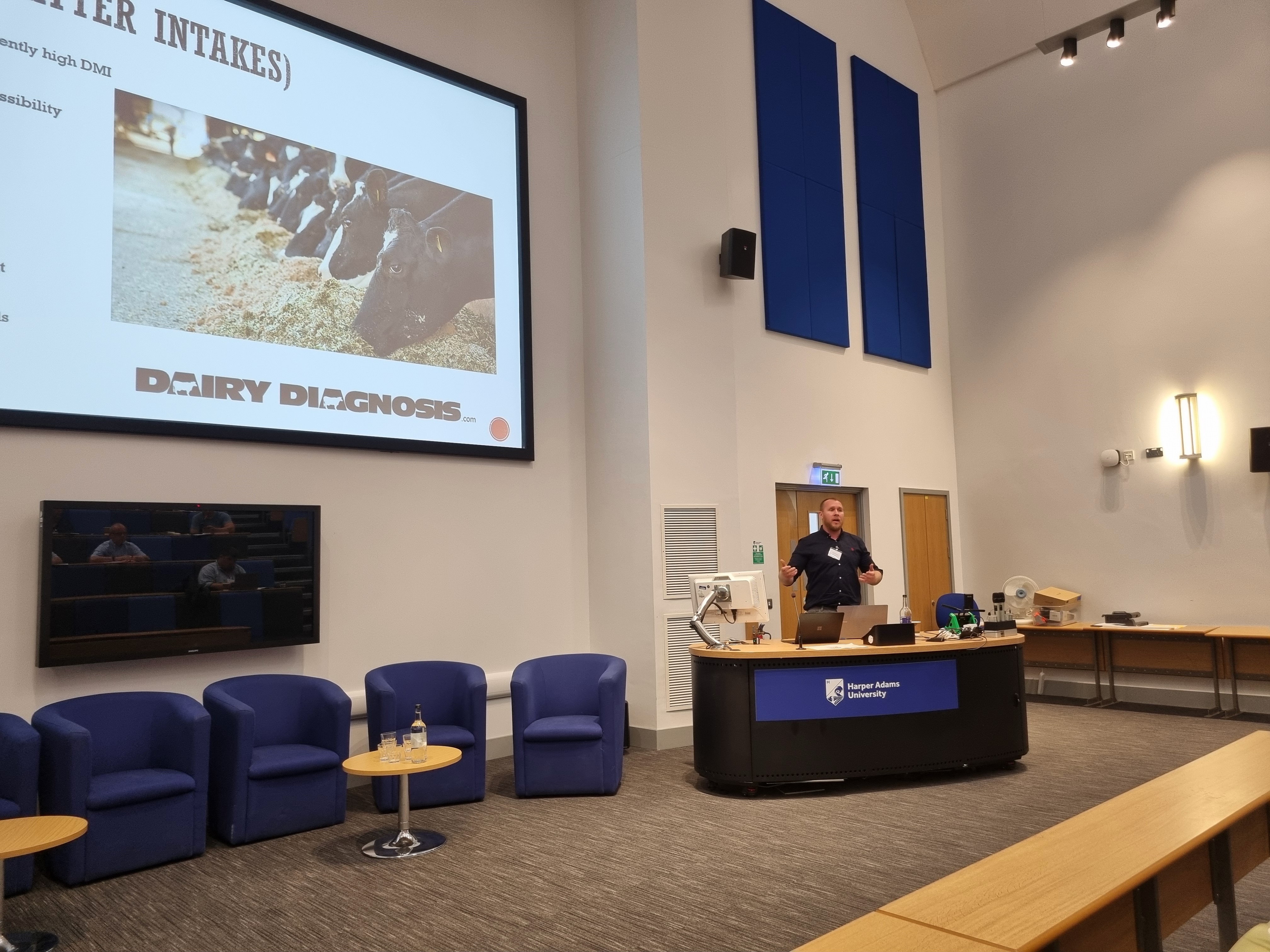
That was the overarching message from Volac’s Maize Symposium which took place on 7th and 9th July at Exeter Sandy Park, Devon, and Harper Adams University College, Shropshire.
Jackie Bradley, global product manager for Volac Forage Additives told delegates: “Maize delivers high yields of energy-rich, palatable forage which makes it an important part of many dairy diets and a valuable tool for increasing milk from forage. However, it is an expensive crop to grow so protecting that investment is essential.”
Speakers highlighted how multiple management decisions influenced successful maize production and utilisation. Their six main tips for farmers were:
1. Prioritise crop nutrition
Prioritising crop nutrition for optimal quality would translate into better milk from forage, said Thomas Turner, KWS technical advisor and regional sales manager.
He advised treating maize like a cereal and applying fertiliser incrementally through the growing season using sap testing to identify key nutrients that were missing and replacing them accordingly. As nitrogen and sulphur were highly mobile and readily lost in the soil profile, front loading fertiliser at the start of the season could mean the nutrients were gone by the time the crop needed them.
2. Use a proven silage additive to prevent spoilage
Spoilage in the clamp negatively impacted dry matter intakes and lowered NDF digestibility, leading to less milk in the tank, said Dr Mark Leggett head of R&D and technical for Volac.
Aerobic spoilage could occur once the clamp was opened and exposed to air causing yeasts to proliferate leading to heating/spoilage and dry matter and energy losses. He advised using a proven silage additive such as Ecocool, which included L. buchneri PJB/1 to create acetic acid. This acid was a powerful inhibitor of yeasts and moulds, so could help tip the balance in farmer’s favours.
3. Consider using drones to monitor clamp management.
Drones could be used to identify issues on top of the clamp that might not be visible from the ground but could be causing quality issues, said forage account manager for Vita Plus in the USA, Cody McCary. This information could then be used to improve clamp management.
 “If you have a drone, it’s something you can do if you can’t see the top of your plastic. Zip it around the top, take a look and see what you can see,” he said. “You want to see the tyres kissing, remember silage is a romantic process. You don’t want to see that plastic flapping around.”
4. Be mindful of increased mycotoxin risk
All farmers needed to be mindful of changes in mycotoxin risk because of climate change, said Dr Hsueh-lui Ho, global technical manager for feed additives at Volac.
 Mycotoxins were produced by certain moulds which could grow on bought-in feeds and home-grown silages. These invisible toxins had wide-ranging effects including suboptimal yields and poor fertility.
Dr Ho highlighted how the UK had traditionally been seen as low risk for Aflotoxins but hotter temperatures and imported feed could potentially raise that risk. Aflatoxins could result in Aflatoxin M1 (AFM1) in milk, which has a maximum permitted limit in the UK and EU. Issues had already been seen in The Netherlands where around 500 farmers were blocked from selling milk without additional stringent testing due to contamination caused by bought in French maize. To protect herds, Dr Ho advised analysing feed for mycotoxins and incorporating a Mycotoxin remediator, such as UltraSorb R, into diets to reduce mycotoxin risk.
5. Think about how you can increase starch availability to the cow
To get the most from maize in the diet, think about how you could increase starch availability, said Limin Kung, Jr, Emeritus Professor at The University of Delaware.
He advised visually monitoring silage processing score or corn “cracking” in freshly chopped maize to see if the crop was being harvested optimally to promote starch digestion in the diet.
“95% of the kernels ought to be cracked or crushed and you’ve got to have 65-70% smaller than a third to a quarter of the kernel size,” he said.
He also urged farmers to try and avoid opening maize clamps for a target 4-6 months to optimise starch digestibility.
6. Think about ration balance
Iwan Vaughan, ruminant nutritionist at Dairy Diagnosis stressed it was important to get the balance of fibre correct in the diet to optimise throughput and utilisation. He said maize complemented quality, multi-cut grass well. Both had a relatively low total NDF to help increase total forage DM in the diet, but maize had a higher percentage of uNDF (undigestable NDF) to balance the passage through the rumen and optimise forage utilisation.