FOLLOW THE FORAGE – summer drought drives 2027 rethink
21 November 2026
A much-needed dose of autumn rain enabled Mark Fitton to take a late silage cut in October and bridge a forage gap, but the summer drought has instigated a forage rethink for 2027.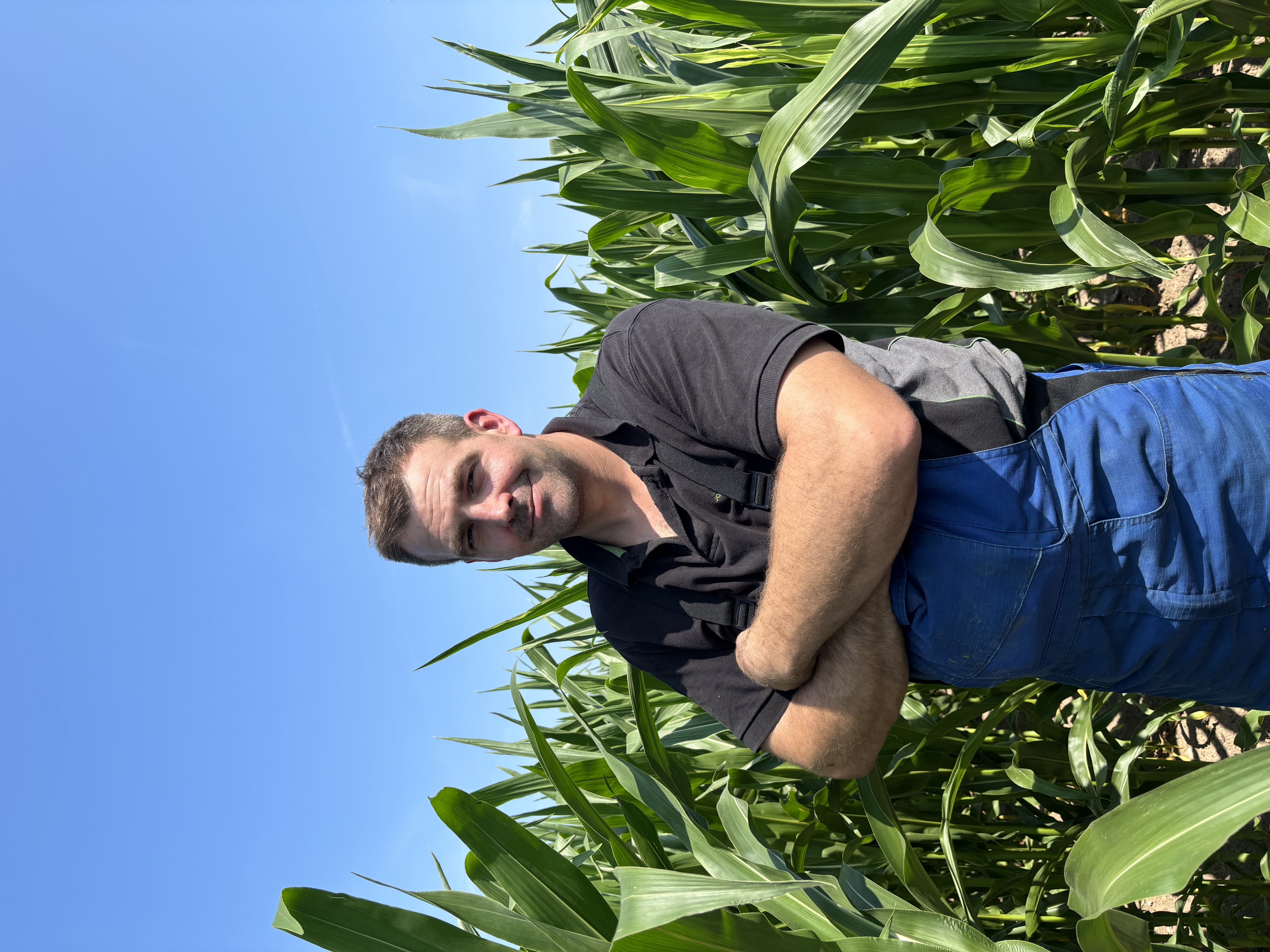
Speaking shortly after silaging 140 acres, he said: “Forage stocks are not a worry now. It will still be tight but it’s much better than it could have been. It’s all greened up now and if the conditions are right, we’ll go for a fifth cut.
Mark runs 250 Procross Swedish Red x Montbeliarde x Holstein cows at The Farms Whitchurch. He is a silage cut short of where he would usually be as a result of the prolonged hot, dry summer. Fourth cut came off at about 29-30% dry matter and 4-5t/acre, having received nitrogen and sulphur at the end of August. Warm conditions meant grass only needed tedding once. As always, Ecosyl silage additive was applied on every tonne.
Ecocool silage additive was also applied to the maize silage, which came off on 30 August, almost exactly to the same day as last year, with the crop yielding 19t/acre. Quality was not as good as usual because of the drought, analysing at 23.6% starch, although dry matter was on target at 31.6%.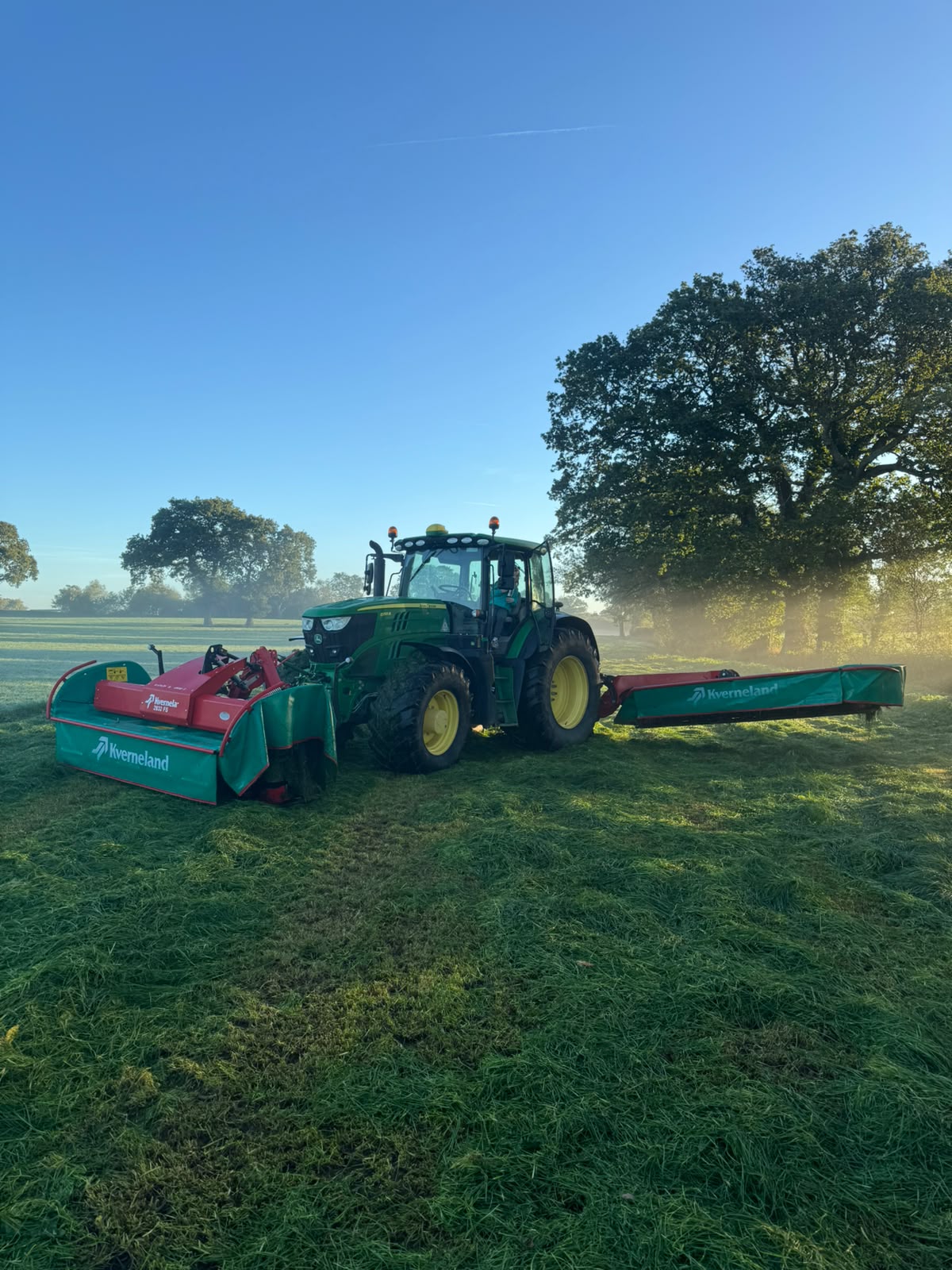
To build resilience to increasingly dry, warm conditions, Mark decided to drill 100 acres of lucerne into maize stubbles after harvest. The dry summer meant weed control was excellent and soils warm, making it an ideal opportunity to grow lucerne, which does not deal well with competition during establishment.
Mark explained: “Forage stocks keep getting depleted and depleted. You can’t keep doing the same thing, you’ve got to change something. Lucerne has got a one metre root so it just keeps growing in dry conditions. I planted some lucerne and grass leys in 2018 (which was very dry) and they were the only leys that kept growing.
The lucerne will also provide a break to continuous cropping on maize ground, with maize being relocated to the farm’s heifer ground which has historically been down to grass. The plan is to take one cut of grass off the heifer ground in the spring and then drill maize.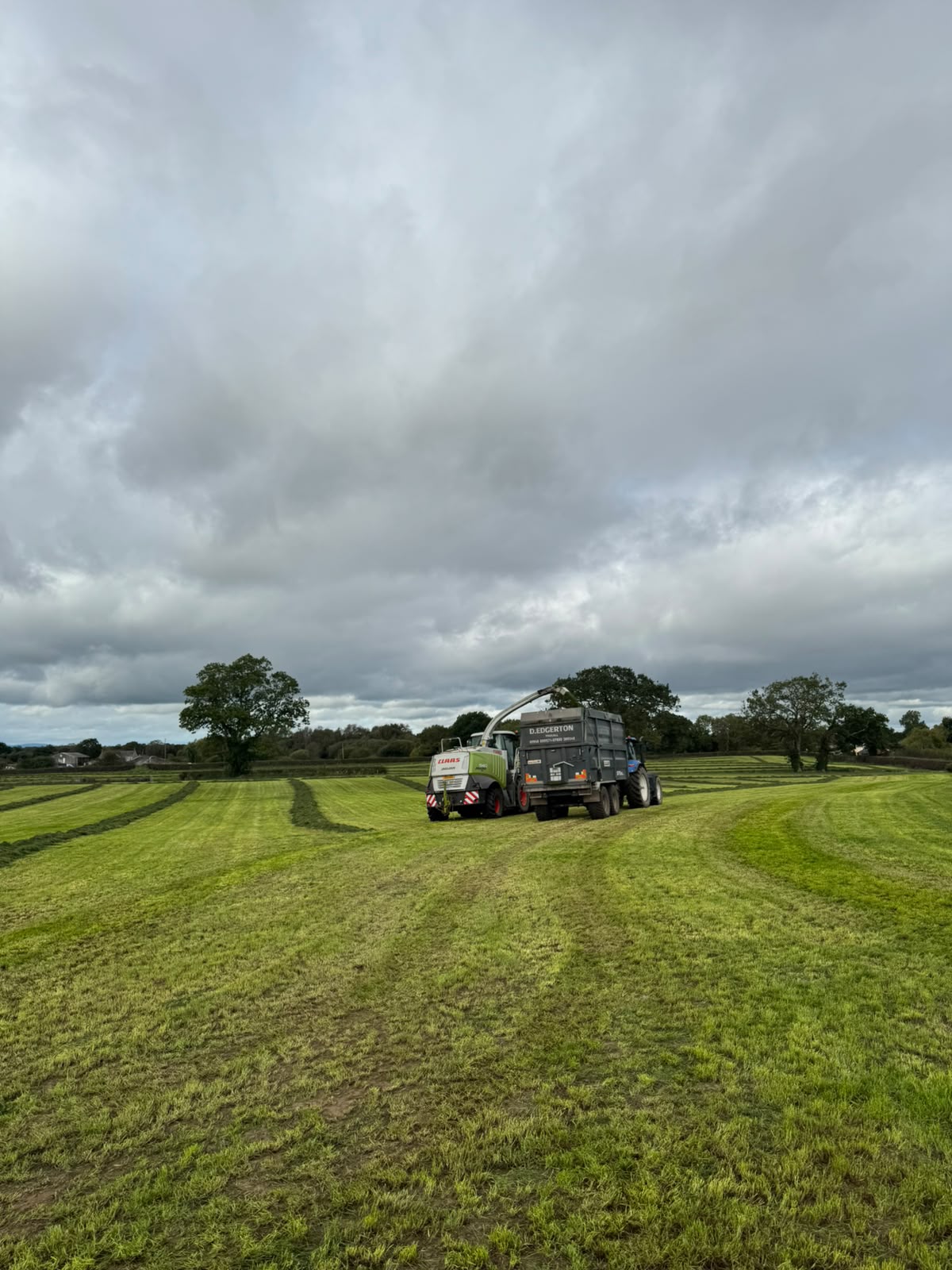
Windy, dry and warm conditions meant the newly sown lucerne was struggling in October at around an inch in height, when it should ideally be 2-3 inches. Mark was confident a good dose of rain would get it back on track.
The plan is to apply glyphosate in the spring and then drill a 3-5 year perennial ryegrass ley into the lucerne to get a double crop of lucerne and grass. Ultimately the aim is to optimise forage tonnage and build business resilience,” he said.
For more information on forage management and planning for changing weather conditions, visit our website.